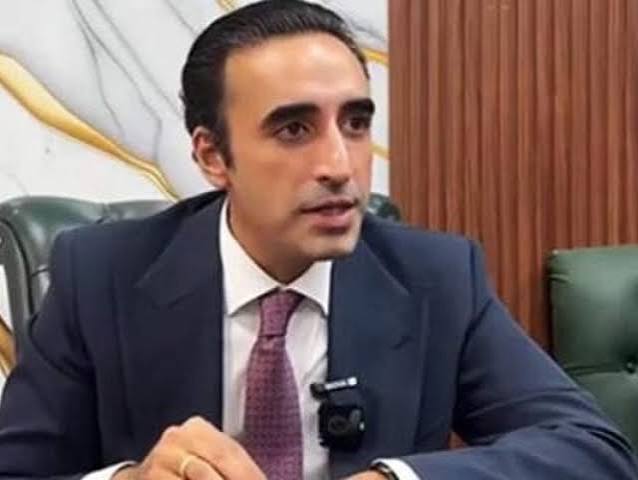
Pakistan Peoples Party (PPP) Chairman Bilawal Bhutto Zardari has called for a political reset in Pakistan, arguing that the country’s governance system did not collapse on its own but was pushed towards failure. Speaking at the Karachi Press Club on November 17, 2026, he stressed that meaningful improvements require political dialogue, parliamentary cooperation and renewed public confidence in state institutions.
His remarks come amid an ongoing national debate about governance reforms, the creation of new administrative units and the future direction of Pakistan’s political system. Bilawal believes that political representatives must take responsibility for addressing these challenges rather than relying on solutions that do not examine the underlying problems.
Background: Why Is Pakistan Discussing a Political Reset?
The discussion about a possible governance reset gained attention after Interior Minister Mohsin Naqvi questioned the effectiveness of the existing administrative structure and suggested creating new administrative units.
His comments generated debate among political parties and policymakers about whether Pakistan needs structural changes to improve governance.
Bilawal Bhutto has offered a different perspective. While acknowledging that reforms are necessary, he argues that changing administrative boundaries alone will not resolve the country’s deeper political and institutional difficulties.
According to his position, the reasons behind governance failures must first be understood before any major changes are introduced.
Pakistan has experienced prolonged political disagreements, changing government priorities and tensions between political stakeholders. These challenges have also affected discussions about parliamentary effectiveness and institutional accountability.
Bilawal Bhutto Says the System Was Made to Collapse
Addressing journalists at the Karachi Press Club, Bilawal questioned why the national debate was concentrating on the condition of the system without adequately examining the reasons behind its problems.
He stated that the country needed a reset, but it should be political rather than imposed through a non-political process.
The PPP chairman also acknowledged that politicians, including himself, had responsibilities in the situation. He indicated that political mistakes must be recognised and corrected if the country is to move forward.
His comments highlighted the importance of accountability within political leadership. Instead of blaming individual institutions or political opponents, he called for a broader discussion about the decisions that have contributed to the current situation.
Bilawal also emphasised that state institutions need public legitimacy. Restoring confidence, he argued, is essential for improving the relationship between citizens, elected representatives and government institutions.
Parliament Must Play a Central Role in Political Reforms
One of the major points in Bilawal’s address was the importance of Parliament in determining the country’s political future.
He argued that politicians are elected representatives of the people and therefore must take responsibility for resolving national challenges.
According to him, any meaningful political reset should begin inside Parliament, where government and opposition parties can discuss disagreements through democratic procedures.
He also defended the opposition’s right to question government policies. Bilawal said political criticism should not automatically be treated as hostility towards the country.
In a parliamentary democracy, disagreement is a normal part of political activity. Opposition parties are expected to examine government decisions, raise public concerns and demand accountability.
Pakistan’s political institutions can function more effectively when elected representatives have opportunities to express their views without unnecessary confrontation.
For additional context, readers can explore Pakistan Chronicle’s coverage of parliamentary leadership and political reconciliation.
Bilawal Supports Maulana Fazlur Rehman’s Right to Criticise the Government
Bilawal also discussed the recent political tensions involving Jamiat Ulema-e-Islam-Fazl (JUI-F) chief Maulana Fazlur Rehman.
He maintained that opposition leaders have a democratic right to criticise government decisions, even when their statements are uncomfortable for those in power.
His remarks came amid disagreements between Fazlur Rehman and federal government representatives over political and administrative matters.
Bilawal argued that the government should respond to criticism through discussion instead of allowing political disagreements to develop into personal confrontations.
He also highlighted the importance of rebuilding confidence among opposition parties, suggesting that Parliament cannot function properly if major political stakeholders lose trust in the institution.
The PPP chairman described political differences as an important element of democratic debate and stressed that criticism should not be confused with a lack of patriotism.
Electoral Reforms and Political Trust Remain Important
Another significant issue raised during the address was the need to restore confidence in Pakistan’s electoral process.
Bilawal pointed towards recurring allegations of election irregularities and argued that these concerns should be addressed through meaningful reforms.
Electoral credibility is important because citizens need confidence that their votes are properly represented. Political parties must also have trust in the institutions responsible for conducting and overseeing elections.
Without confidence in the electoral process, political disagreements can become more difficult to resolve.
Bilawal suggested that addressing election-related concerns should form part of a wider political reform process.
For Pakistan, improving transparency and strengthening democratic procedures could help create better conditions for political cooperation.
Economic Pressures Continue to Affect Ordinary Pakistanis
Beyond political disagreements, Bilawal expressed concern about the country’s economic difficulties.
He highlighted poverty, unemployment and inflation as major challenges affecting households across Pakistan.
Rising living costs have made it increasingly difficult for many families to manage essential expenses. Education, healthcare, electricity bills and food prices remain important concerns for lower-income and middle-class households.
He argued that political leaders should concentrate more seriously on these public issues rather than allowing political divisions to dominate national discussions.
The relationship between political stability and economic confidence is also important. Businesses, investors and ordinary citizens benefit from predictable policies, effective administration and consistent government decisions.
Pakistan’s economic difficulties cannot be resolved through political statements alone. They require practical policies, effective implementation and cooperation between relevant institutions.
Media Freedom and Institutional Credibility
Bilawal also highlighted the importance of independent journalism during his address.
He described the media as an important institution that helps communicate public concerns, question government decisions and hold those in authority accountable.
Journalists play a significant role in democratic societies by providing information and giving citizens access to different perspectives.
However, concerns about restrictions, professional pressures and the safety of journalists remain part of Pakistan’s wider media discussion.
Bilawal argued that media institutions must be able to perform their responsibilities without unnecessary pressure.
He also referred to the Karachi Press Club as an important institution in Pakistan’s journalistic and democratic history.
The broader issue of institutional credibility is closely connected with public confidence. When citizens believe that institutions operate transparently and independently, democratic processes become more meaningful.
What Could Bilawal’s Political Reset Mean for Pakistan?
The proposal for a political reset raises several important questions about the country’s future direction.
First, political parties would need to establish meaningful communication channels. Government and opposition representatives may have different priorities, but national challenges require constructive engagement.
Second, Parliament would need to become a more effective platform for discussing reforms, legislation and public concerns.
Third, institutions responsible for elections, governance and accountability would need to demonstrate transparency and consistency.
Finally, political leadership would have to give greater attention to the economic problems experienced by ordinary citizens.
Pakistan Chronicle has also covered wider debates about government accountability and political responsibility, highlighting the importance of transparent governance.
Regional and International Implications
Political stability in Pakistan has significance beyond domestic politics.
The country maintains important economic, diplomatic and security relationships across South Asia, the Middle East and other international regions.
Prolonged political uncertainty can influence investor confidence, economic planning and international perceptions of the country’s institutional stability.
A stronger parliamentary environment and consistent governance policies could help Pakistan maintain more predictable relations with international partners.
However, meaningful progress will depend on practical reforms rather than political announcements alone.
International observers and economic stakeholders will continue to watch how Pakistan’s political leadership responds to governance challenges and whether different political groups can establish a workable understanding.
What Happens Next?
Bilawal indicated that he would seek to develop political consensus within his party before engaging other political stakeholders.
The federal government’s position and the willingness of political parties to participate in meaningful discussions will be important in determining what happens next.
Whether the proposal develops into a broader political initiative remains to be seen.
For now, the discussion has brought attention back to Parliament, institutional credibility, political cooperation and the need to address public concerns.
Conclusion
Bilawal Bhutto Zardari’s call for a political reset has added another dimension to Pakistan’s ongoing discussion about governance and institutional reforms.
His central argument is that administrative restructuring alone cannot address the country’s deeper political challenges. He believes that Parliament, elected representatives and democratic dialogue must play the leading role in rebuilding confidence.
The coming weeks will be important in determining whether political parties can move beyond disagreements and develop a common approach to national challenges.
Ultimately, the success of any political reset will depend on its practical results, including stronger institutions, transparent governance, economic relief and greater public confidence.
Frequently Asked Questions
1. Why has Bilawal Bhutto called for a political reset in Pakistan?
Bilawal Bhutto has called for a political reset because he believes the country’s governance challenges cannot be resolved through administrative restructuring alone. He argues that political leadership must examine the reasons behind institutional weaknesses and take responsibility for correcting past mistakes. He has also stressed that Parliament should lead the reform process through political dialogue and democratic cooperation.
2. What did Bilawal Bhutto say about Pakistan’s governance system?
During his November 17 address at the Karachi Press Club, Bilawal stated that the system had not simply collapsed but had been made to collapse. He argued that political leaders should examine the causes of the situation instead of concentrating only on proposed solutions. He also acknowledged that politicians, including himself, have responsibilities in addressing the country’s challenges.
3. Why does Bilawal believe Parliament should lead political reforms?
Bilawal believes Parliament is the appropriate institution for discussing national reforms because it represents the people through elected representatives. He argues that both government and opposition parties must have opportunities to express their views, question decisions and participate in important discussions. According to his position, rebuilding parliamentary confidence is necessary for a functioning democratic system.
4. What role does the opposition play in Pakistan’s democratic system?
The opposition plays an important role by questioning government policies, highlighting public concerns and demanding accountability. Its participation helps ensure that different political perspectives are represented in Parliament. Bilawal has emphasised that criticism of government decisions is a democratic right and should not automatically be treated as opposition to the country.
5. How could a political reset affect Pakistan’s economy and public?
A meaningful political reset could help create more predictable governance and improve cooperation between political stakeholders. Greater institutional confidence may also support economic planning, investment and policy continuity. However, ordinary citizens would ultimately judge progress through practical improvements such as employment opportunities, affordable living costs, better public services and effective economic policies. Political cooperation alone will not solve these problems without proper implementation.